
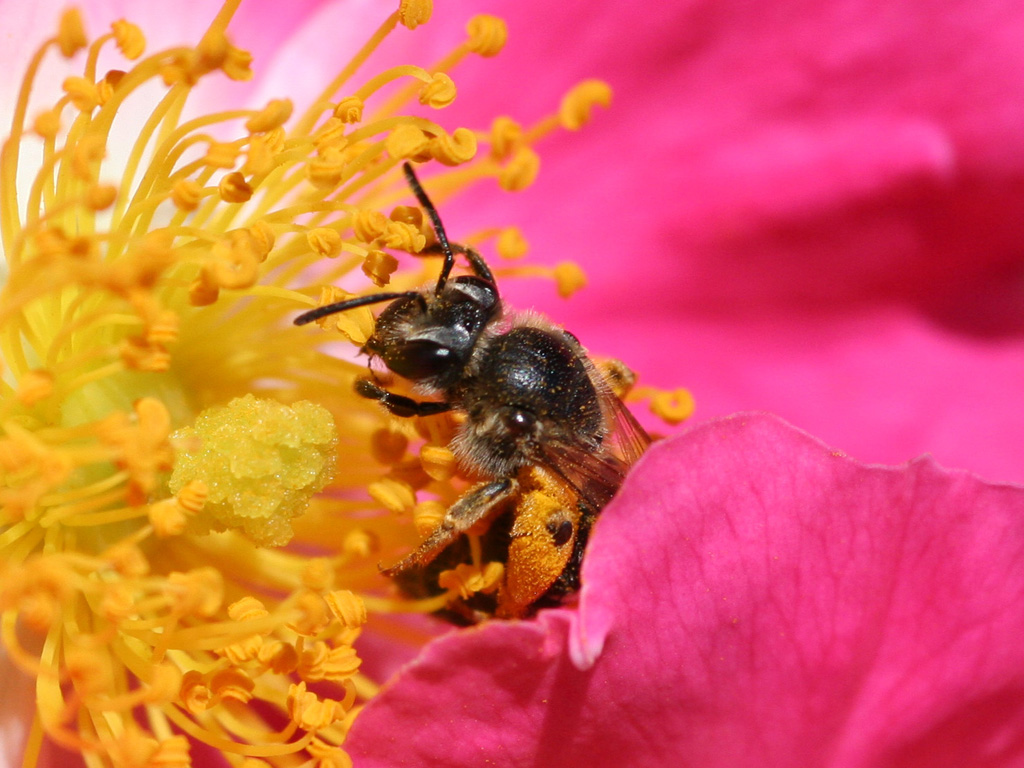


A visitor landing on a flower gives you a behaviour to record. It does not automatically prove successful pollination.
Understand the context
Species, behaviour and observation time answer different questions. When reading pollinator garden material, distinguish a visit to a flower from the plant's reproductive outcome. A short observation can be useful if the method and its limits are clearly described.
Try a learning activity
- Select one flower patch visible from a suitable place.
- Record the start time and length of observation.
- Describe visits without inventing an identification.
- Explain what evidence would be needed to claim successful pollination.
Reflect on the evidence
Compare your record with the source. Which details did you observe directly, which did you learn from the reading, and which remain uncertain? Keep those answers separate. Add the place, date and method when they are known; a short observation or a single photograph does not describe an entire landscape.
Reading source: USFWS — Pollinator Garden Handbook.
Learning activity prepared by Living Heritage. Source review date retained from the original editorial record: 29 September 2026. This activity is an educational exercise, not a scientific survey or a field intervention plan.