
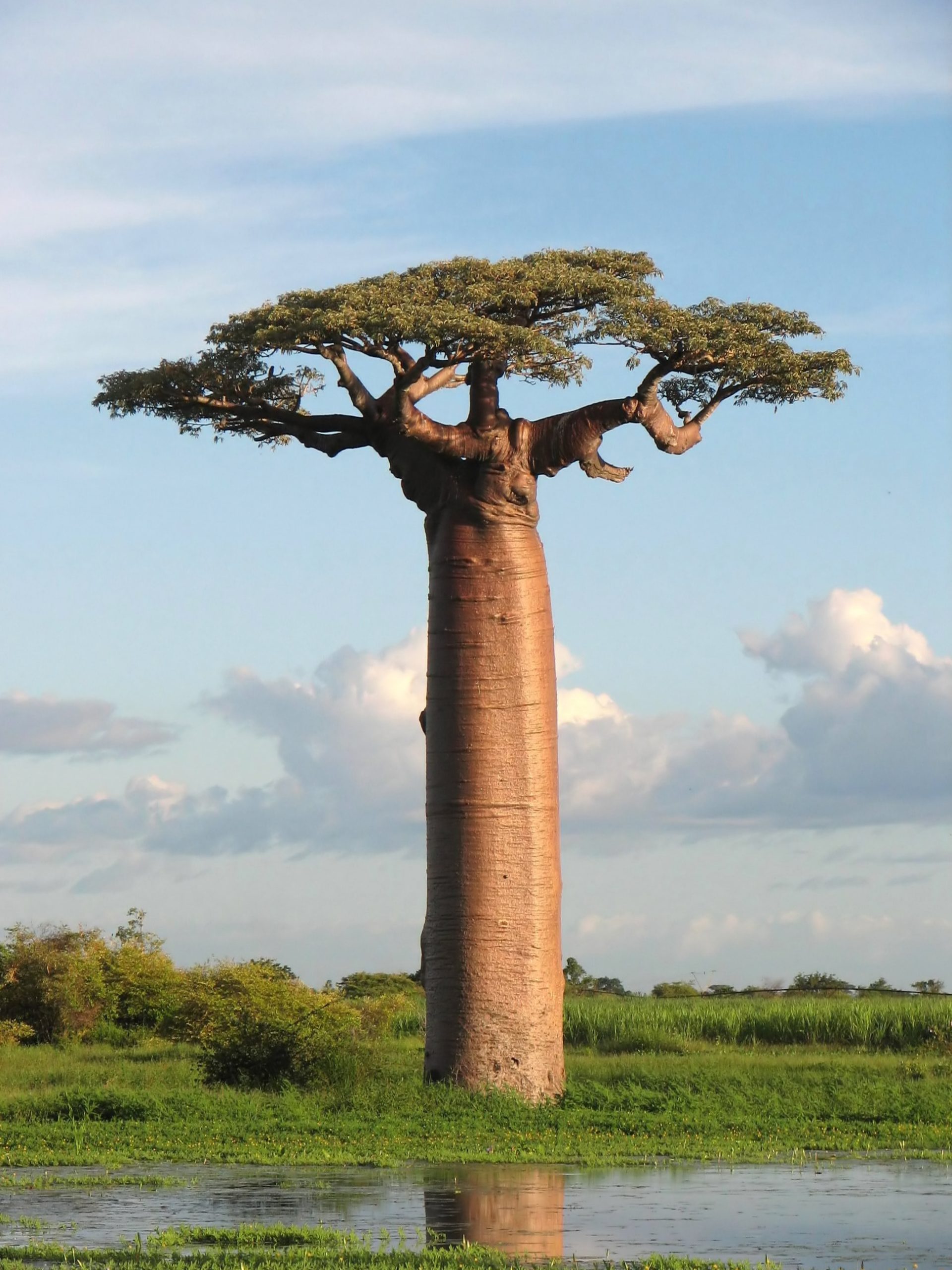


A large trunk can dominate a photograph. A better learning record also asks about flowers, visitors and the place where the tree grows.
Understand the context
Kew identifies the giant baobab as Adansonia grandidieri, native to Madagascar, and describes roles for moths, bats and lemurs in pollination. The name baobab refers to more than one species. Information about one species should not automatically be applied to every baobab.
Try a learning activity
- Draw the tree and leave space around its flowers.
- Add pollination relationships described in the source.
- Label the species and the source of each relationship.
- Write one question that a trunk photograph cannot answer.
Reflect on the evidence
Compare your record with the source. Which details did you observe directly, which did you learn from the reading, and which remain uncertain? Keep those answers separate. Add the place, date and method when they are known; a short observation or a single photograph does not describe an entire landscape.
Reading source: Kew — Giant baobab.
Learning activity prepared by Living Heritage. Source review date retained from the original editorial record: 29 September 2026. This activity is an educational exercise, not a scientific survey or a field intervention plan.