
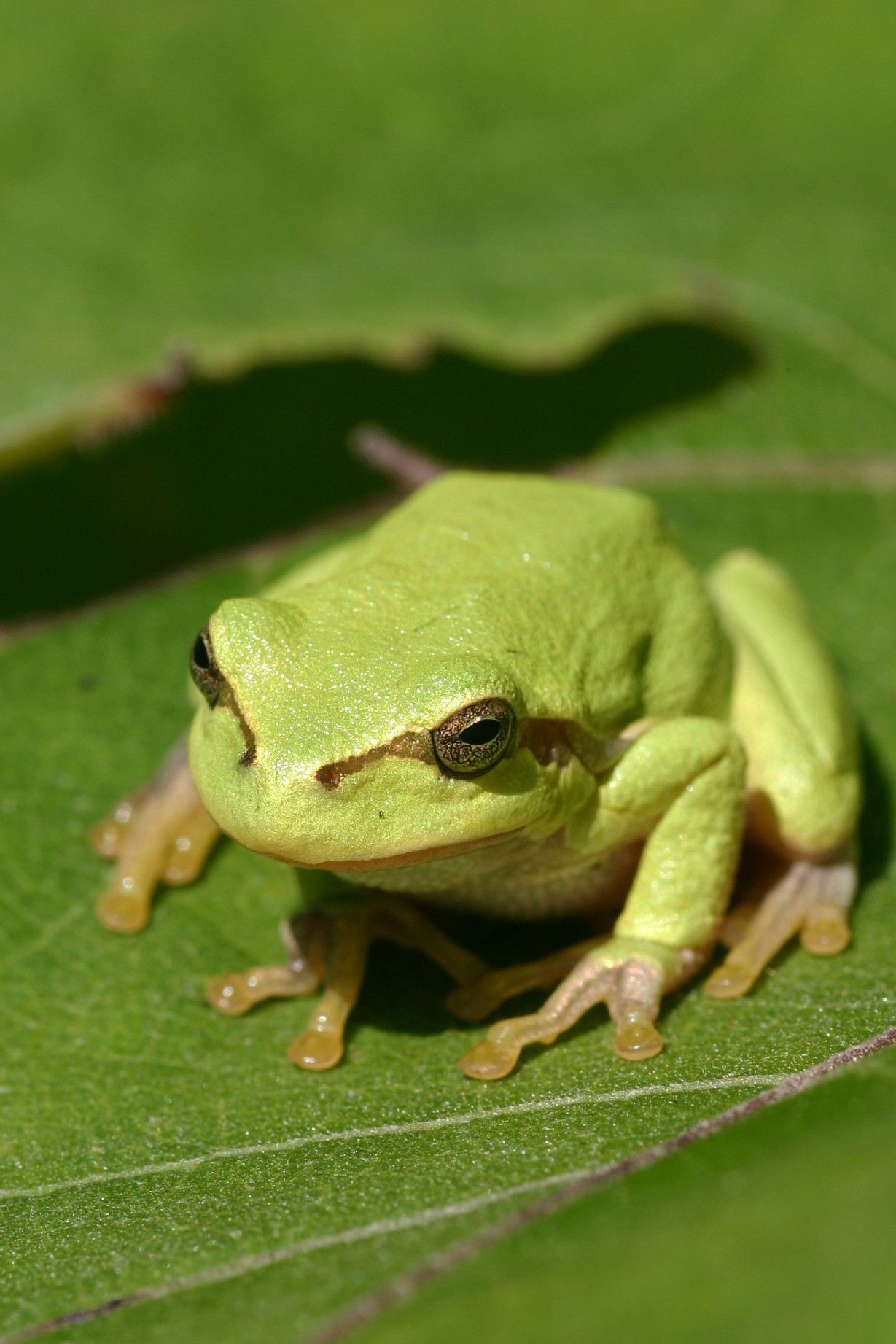

A frog can prompt questions about both land and water. Its presence is a starting point for investigation, rather than a complete environmental assessment.
Understand the context
Amphibians attract attention in environmental studies because their life stages connect land and water. The Amphibian Survival Alliance considers conservation together with habitats and multiple pressures. Seeing an amphibian does not by itself prove that every environmental condition is healthy.
Try a learning activity
- Draw the water and land areas around an imaginary pond.
- Record what a photograph shows and what remains unknown.
- List other evidence needed to describe habitat conditions.
- Observe without capturing or moving an animal.
Reflect on the evidence
Compare your record with the source. Which details did you observe directly, which did you learn from the reading, and which remain uncertain? Keep those answers separate. Add the place, date and method when they are known; a short observation or a single photograph does not describe an entire landscape.
Reading source: Amphibian Survival Alliance.
Learning activity prepared by Living Heritage. Source review date retained from the original editorial record: 29 September 2026. This activity is an educational exercise, not a scientific survey or a field intervention plan.