
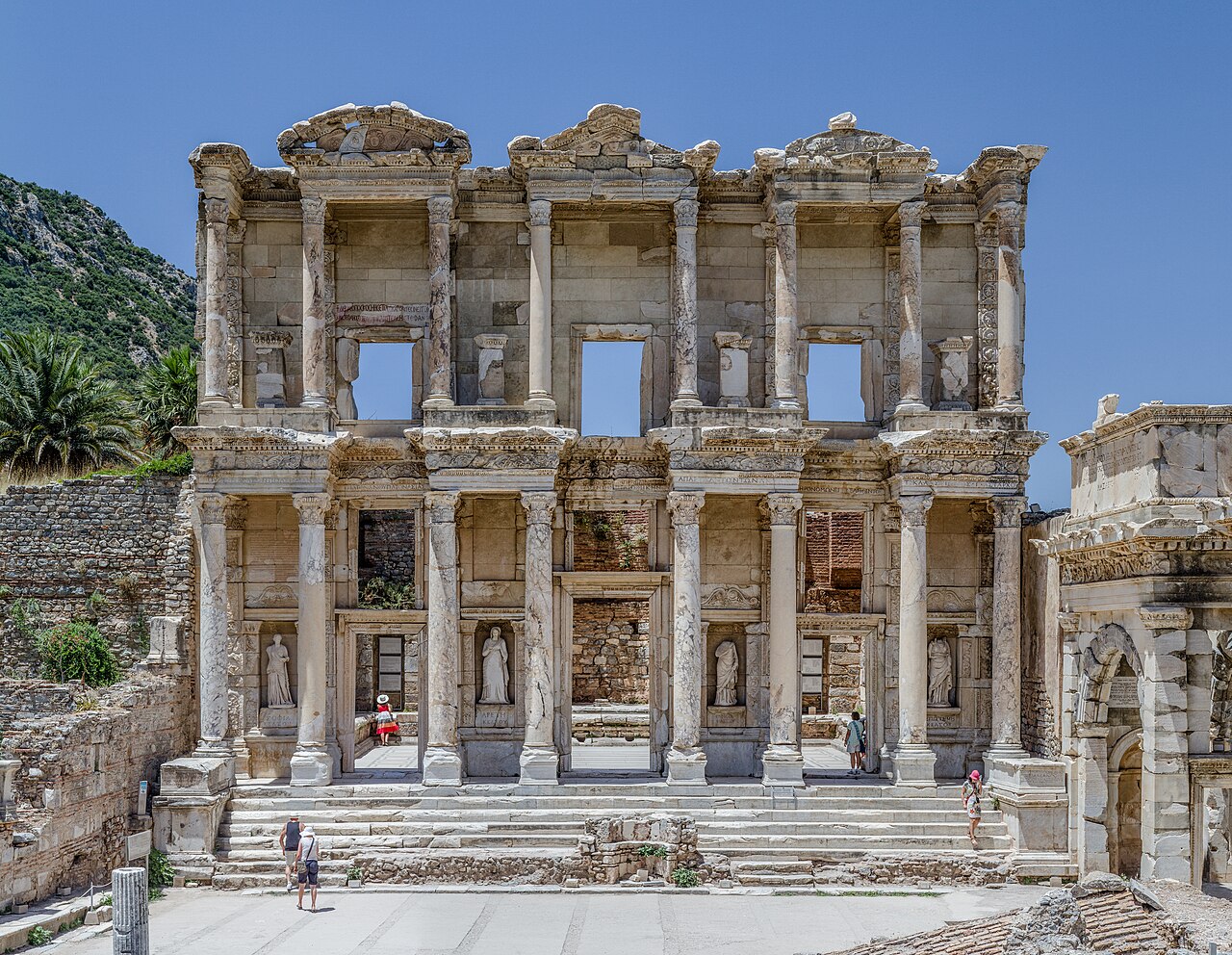

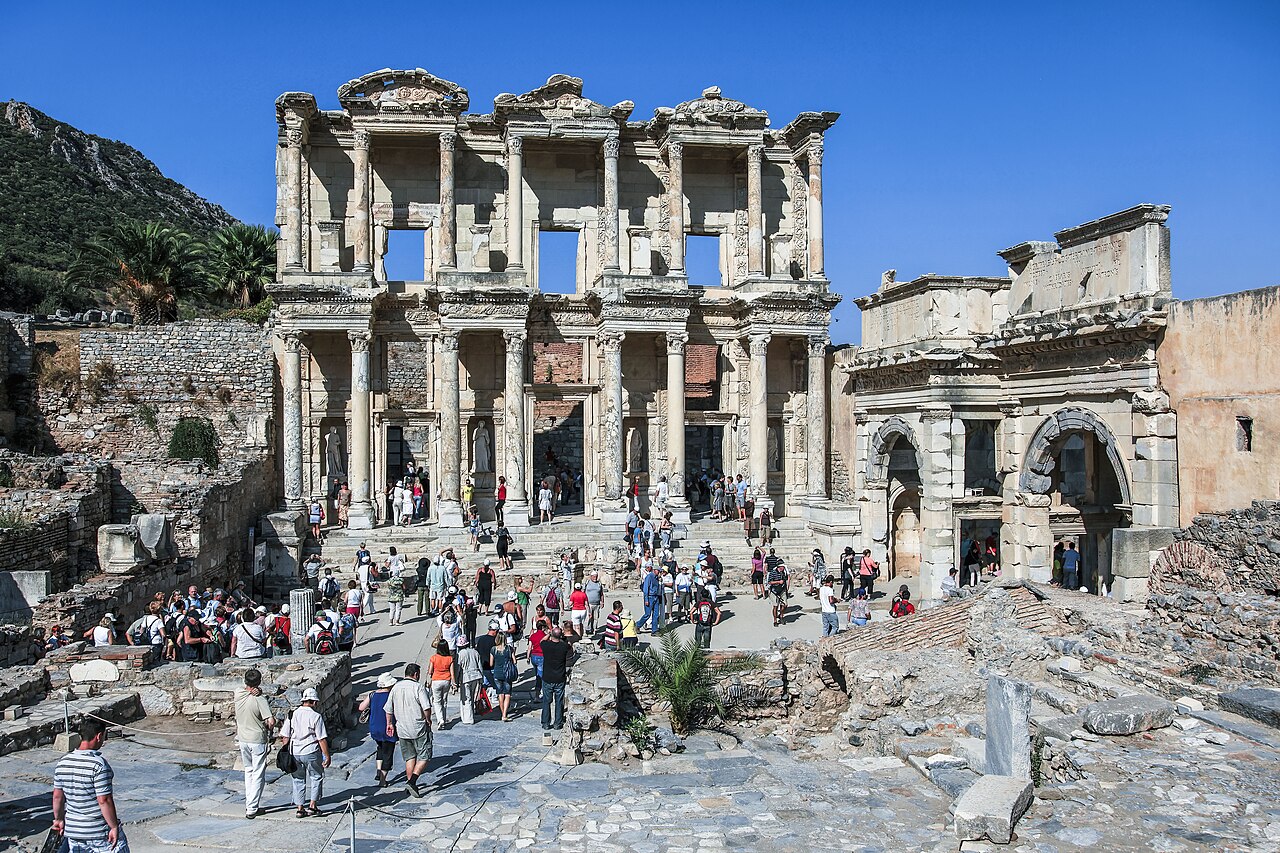

The present view of an ancient city can hide its former relationship with water. A monument photograph needs a wider landscape context.
Understand the context
UNESCO describes Ephesus with settlements at the former mouth of the Kaystros River and a changing coastline. The Library of Celsus and Great Theatre are prominent structures. The appearance of the ancient port city today does not directly show its past connection with the sea.
Try a learning activity
- Draw separate sketches for present surroundings and historical questions.
- Locate the photographed monument within the wider site.
- Use the source to add the coastal context.
- Mark uncertain reconstructions rather than presenting them as observations.
Reflect on the evidence
Compare your record with the source. Which details did you observe directly, which did you learn from the reading, and which remain uncertain? Keep those answers separate. Add the place, date and method when they are known; a short observation or a single photograph does not describe an entire landscape.
Reading source: UNESCO — Ephesus.
Learning activity prepared by Living Heritage. Source review date retained from the original editorial record: 29 September 2026. This activity is an educational exercise, not a scientific survey or a field intervention plan.